Click to Return to the Resources Home Page


Search All Wally's Sites Using Keywords

Resources for
This Postcard

Postcards from the Digital Age
I, Yi, Yi, Robot

What do you think of when you hear the word "robot?" Is it something human-looking like R2-D2 from Star Wars? Or is it an alien-looking creature that welds car bodies?

This week the film, I, Robot, will be, as they say, "in theaters everywhere." With a star like Will Smith, you can expect the movie to be funny, and if it's based on something by Isaac Asimov, you can expect the story to be good.

Well, maybe. I, Robot may or may not be a great movie, but it is the latest manifestation of a fascination that we humans have had with the idea of robots for just about as long as we've been able to imagine.

The Greeks imagined statues that moved. In the Eighteenth Century folks were fascinated by the automatons that could, among other things, play chess.

Today, when most of us think of robots, we imagine something humanoid. For that you can thank the great writers of science fiction's golden era, including Karel Capek and Isaac Asimov.

It was Capek who gave us the term "robot" in his play RUR in the 1920s. "Robot" comes from the Czech word that means "forced labor." In RUR humanoid robots became more precise and reliable than humans and almost took over the world.

Isaac Asimov wrote a lot about robots. Actually he wrote a lot about a lot of things. In his lifetime, Isaac Asimov published over 500 volumes of science, science fiction, history and more. I want to be like him when I grow up.

Among all his works are the remarkable Foundation Series and "Nightfall" which I think is the best science fiction story ever written, as well as volumes about biology and the Bible. And there is "I, Robot," a collection of stories published in 1950. That's where Asimov outlined his "Laws of Robotics" that have influenced the way science fiction writers have treated robots ever since.

The robots of most of science fiction are not merely humanoid. Usually they can live and work and learn and react like humans. They're what most of us imagine when we hear the word, "robot."

So, there was "I, Robot" the book and, now, there is "I, Robot" the movie to give us a fictional view of robots. There is also iRobot the company, which is as good an example as any of where the romance and reality of robots diverge.

iRobot is a real company today in the real town of Somerville, Massachusetts. They make robots. Not one of the robots they make looks remotely like a human being.

One robot they make is PackBot. Packbot isn't really a robot according to the classic definition. It's more like a radio-controlled car on steroids. The Army is using Packbots to check out caves and bunkers in Afghanistan and Iraq.

That's one thing robots are doing today. They're doing things that are dangerous for humans. Those include disarming bombs and disposing of hazardous materials.

Robots are also doing things that they can do better than we can. Some of those things are big heavy jobs like welding auto bodies and moving them around the plant.

Robots are also better than we are at tasks that require small and precise motions. Surgeons use robot technology to help with thoracic, abdominal, pelvic, and neurological surgery.

That's all wonderful, but the reality is that, despite decades of flamboyant predictions, we haven't been able to put together the science and engineering to make human-like robots. Sure, we have developed robots that can do lots of important work, but I'm not impressed.

I don't have a factory where I can use a robot. What I dream of is a robot that will clean the bathroom properly without supervision. I know that's a daunting task. Heck, it's had to get humanoid teenagers to do it right.

Maybe, though, just maybe with some good engineering and concentrated effort we can have such a robot in my lifetime.

Top of page

RESOURCES

The movie I, Robot has the usual official Web site.

So does the company iRobot.

Isaac Azimov was one of the great science fiction authors. In fact, I'd put him up there with the great authors of all time. Here are some of his works that are among my favorites.

I, Robot is the book the movie is based upon. It includes the "Laws of Robotics."

Prelude to Foundation is the first book in the Foundation series and therefore a worthwhile place to start if you haven't experienced this classic.

The classic story Nightfall can be found in Nightfall and Other Stories. This is worth buying for the title story alone.

My favorite collection of Azimov short stories is Nine Tomorrows.

US Robotics is a company that makes things like modems that help folks connect. The name of the company was chosen to match the company in the I, Robot story.

Karel Capek was the Czech writer who gave us the term "robot" in his play RUR. RUR stands for Rossum's Universal Robots.

If like RUR (and I think you will) and you want more of Karel Capek, I suggest The War with the Newts.

The Robot Institute of Carnegie Mellon University not only studies robots and robotics. It's also created a Robot Hall of Fame.

One of the first industrial robots was Unimate which went to work in 1961 at General Motors.

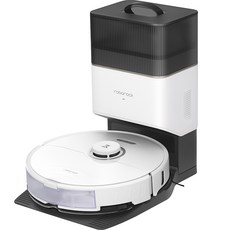
Cleaning the bathroom is kind of like a Turing Test for robots, so several companies have brought out robots that are supposed to do the simpler task of vacuuming or to function as toys or companions or some combination of the above.


13 July 2004

Reprinting and Reposting This Column

You may reprint or repost this article providing that the following conditions are met:

  • The article remains essentially unaltered.
  • Wally Bock is shown as the author.
  • The notice Copyright 2004 by Wally Bock or similar appears on the article.
  • Contact information for Wally is included with the article. You may refer readers to this Web site as a way to meet this requirement. Please link to http://www.bockinfo.com/
  • Here is the wording we suggest when linking to this site. "The article you've just read can be found on Wally Bock's extensive Resource Web site along with many other articles and resources."

Any other reprinting or reposting requires specific permission which is almost always granted. Click here to request permission if necessary.


Top of page


megastarmedia.com creative web site and graphic design
© 2004 Wally Bock. Click for Contact Information.